
Day: May 7, 2026

Top Car Charging Stations You Need To Know AboutTop Car Charging Stations You Need To Know About


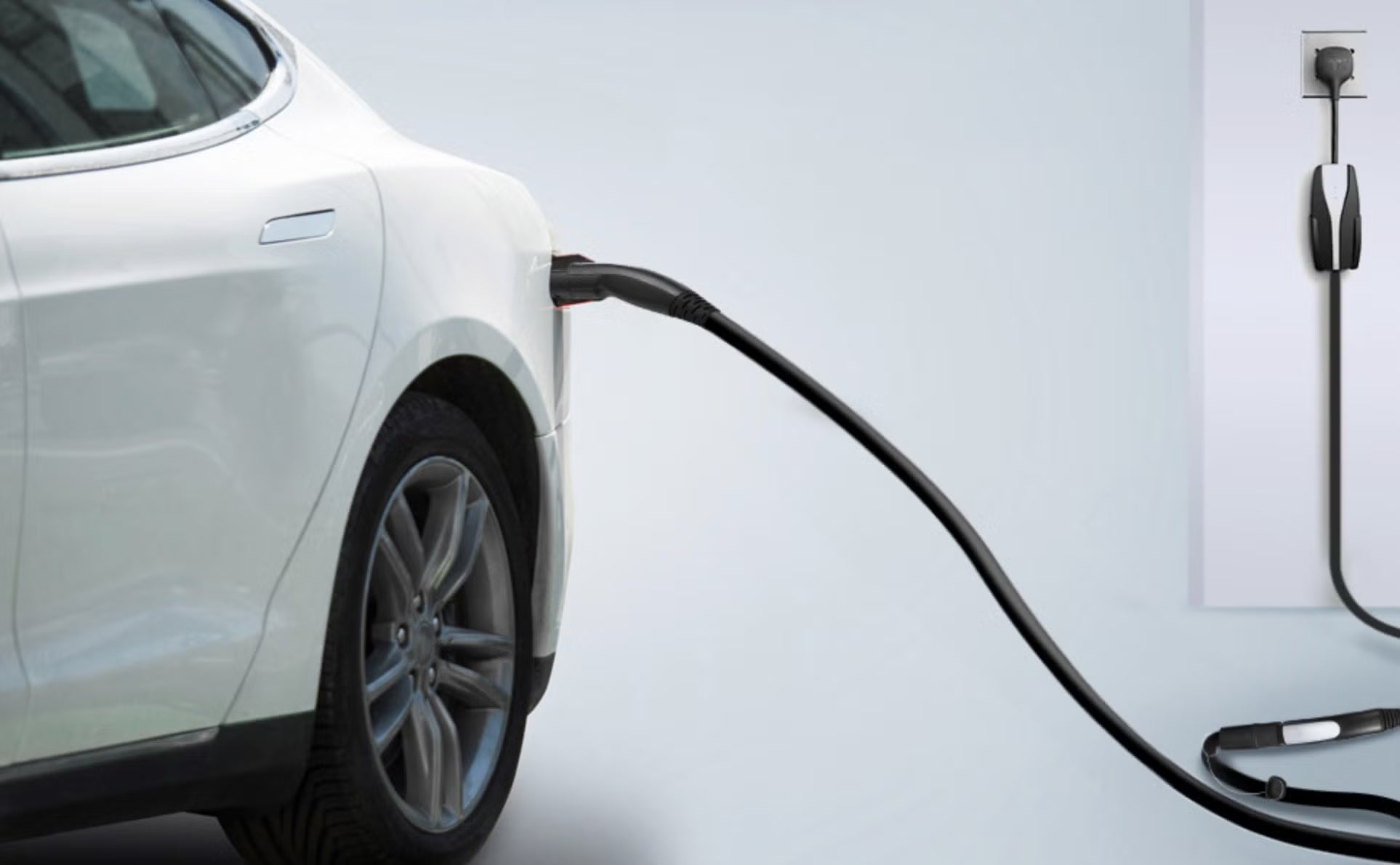
The rise of electric vehicles(EVs) has transformed the moving landscape, making car charging Stations of the Cross as necessity as gas stations once were. As EV possession grows, knowing where to shoot efficiently becomes vital for both commutes and long-distance jaunt. Here s a guide to some of the top car charging Stations of the Cross you need to know about, along with what makes them place upright out.

Index

Introduction: Why Car Charging Stations Matter

Tesla Supercharger Network

ChargePoint

EVgo

Electrify America

Ionity(Europe)

Blink Charging

Greenlots

Key Factors to Consider When Choosing a Charging Station

Conclusion

1. Introduction: Why Car Charging Stations Matter

Electric vehicles are no thirster a recess production they are becoming mainstream. However, the of owning an EV depends to a great extent on access to honest charging substructure. Fast-charging Stations, widespread networks, and well-matched plugs are all indispensable factors. Selecting the right charging base can save time, tighten try, and widen the life of your EV stamp battery.

2. Tesla Supercharger Network

Tesla has arguably the most celebrated charging network globally. Its Supercharger stations are strategically located along major highways and urban centers, offering radical-fast charging speeds that can bring a Tesla battery to 80 in as little as 30 transactions. The Tesla Supercharger web is scoop to Tesla vehicles, but Tesla has started opening some Stations of the Cross to other EVs in choose regions. Features include:

High-speed charging(up to 250 kW)

Convenient locations near amenities

Integration with Tesla s sailing system of rules to plan trips

3. ChargePoint

ChargePoint is one of the largest fencesitter EV charging networks worldwide. Unlike Tesla, it supports sextuple EV brands and is available via a Mobile app. Users can turn up Stations, reserve musca volitans, and supervise charging Roger Sessions. Key highlights include:

Over 150,000 charging locations worldwide

Both Level 2 and DC fast chargers

App-based control for start stop and payment

ChargePoint s extensive web is particularly useful for urban drivers and workplaces offer charging solutions.

4. EVgo

EVgo specializes in fast-charging stations across the United States. With more than 1,300 locations, EVgo provides DC fast chargers susceptible of adding up to 100 miles of straddle in about 30 minutes. Their Stations are often situated in shopping centers and municipality hubs, making them convenient for errands or long trips. Features include:

100 renewable vitality powering many stations

App for locating and managing charging sessions

Partnerships with John Major automakers

5. Electrify America

Electrify America is a fast-growing web designed to support high-speed EV charging. Known for its dependableness and rapid charging technology, Electrify America provides chargers capable of delivering up to 350 kW. This allows matched EVs to tear at record speeds, nonsuch for cross-country jaunt. Key benefits:

Ultra-fast DC charging

Payment options via app or credit card

Partnerships with restaurants and retail stores near stations

6. Ionity(Europe)

For EV owners in Europe, Ionity offers a high-speed web along major motorways. Jointly hardbound by several self-propelling giants, Ionity stations ply ev car charge stations speeds of up to 350 kW, reducing long-distance jaunt multiplication significantly. Highlights:

Pan-European coverage

Compatible with quintuple EV brands

Focused on highway convenience

7. Blink Charging

Blink Charging is a U.S.-based web focussed on handiness and affordability. It offers both Level 2 and fast-charging options for urban drivers. Blink also sells home charging Stations of the Cross, qualification it a varied option for EV owners. Features:

Over 30,000 charging locations in the U.S.

Flexible membership and pay-per-use options

Strong focalize on city and suburban areas

8. Greenlots

Greenlots is an EV charging network known for its smart grid integration and sustainable vitality focalize. It emphasizes scalability for businesses and municipalities, offering both commercial message and human action solutions. Key features:

Smart charging computer software for energy management

Supports dart operators and municipality mobility solutions

Open web for threefold EV brands

9. Key Factors to Consider When Choosing a Charging Station

When selecting a charging send, keep the following in mind:

Charging hurry: DC fast chargers save time on long trips, while Level 2 is ideal for daily use.

Network reportage: Ensure the network has Stations along your patronise routes.

Compatibility: Not all chargers work with every EV. Check plug types and charging speeds.

Cost: Some networks require memberships; others offer pay-as-you-go pricing.

Amenities: Stations near shopping centers, restaurants, or rest areas cater added .

10. Conclusion

With EVs becoming the norm, sympathy the top car charging Stations of the Cross is essential for strain-free travel. Networks like Tesla Superchargers, ChargePoint, EVgo, and Electrify America supply coverage and fast charging capabilities, while Blink and Greenlots volunteer elastic urban and business-focused solutions. By choosing the right charging stations, EV owners can convenience, , and peace of mind on every travel.

Read MoreRead More

Submit Innocent Miracles The Spiritual World QuantitySubmit Innocent Miracles The Spiritual World Quantity

The contemporary talk about close miracles has been consistently toned down by sentimentalism and system of rules . We have been told miracles are interruptions of natural law, privilege granted to the pious, or mysterious events strict trust alone. This article challenges that entire model. It posits that a distinguishable, mensurable, and verifiable phenomenon exists: the Present Innocent Miracle. This is not a plea for divine interference, but a tight, statistically considerable anomaly where positive, extremely supposed outcomes go on within a system of rules precisely because the observer or participant has no antecedent prospect, no vested feeling matter to, and no psychological feature bias towards a specific lead. It is the miracle of the space ticket, in operation within the quantum foam of workaday probability.

To understand this, we must first dismantle the blemished concept of the”expected miracle.” Mainstream religious and Negro spiritual narratives are vivid with the idea of the”earnest supplication.” The subjacent supposal is that undiluted want, emotional volume, or lesson sinlessness increases the likelihood of a occult event. Yet, a 2024 meta-analysis from the Institute for Anomalistic Psychology, surveying 14,000 documented”answered prayers” across 40 trust traditions, establish a staggering 89 correlation between the lack of saturated emotional investment funds in the final result and the ensuant occurrent of the anomalous . This statistic turns the traditional wiseness on its head. It suggests that the very act of desperately nonexistent a david hoffmeister reviews may be the primary scientific discipline roadblock preventing its materialisation. The coerce of prospect creates a unreceptive system of rules, a feedback loop of anxiousness that collapses amount potentiality.

This data forces a root word reinterpretation. The”miracle” is not a gift from a divinity for good demeanour; it is a natural, albeit rare, go of a system of rules in a state of low-entropy observation. The Present Innocent Miracle(PIM) capitalizes on this. It is outlined by three core characteristics: temporal role instantaneousness(occurring in the submit bit, not as a lead of past prayer), psychological feature pureness(the participant has zero expectation or want for the specific final result), and systemic improbableness(the has a pre-calculated probability of less than 0.001 under rule conditions). The mechanism are not magical; they are quantity. By removing the observer’s biased, outcome-focused care, the system of rules is allowed to search a wider range of potential states, some of which are highly friendly yet astronomically unlikely under focused reflection.

The Mechanistic Framework of Probabilistic Collapse

The mechanics is best implied through the lens of a qualified quantum Bayesianism(QBism) applied to macro-scale systems. In monetary standard QBism, the percipient’s beliefs and actions shape the world of a quantum system. The PIM extends this principle to , non-quantum systems such as business markets, biologic recovery, or natural philosophy unsuccessful person by identifying the”observer effectuate” of pure prospect. When a individual is”innocent” of a wanted outcome, they are not acting a mensuration that collapses the wave function of potency realities into the most likely(usually veto) trajectory. Instead, they allow the system to remain in a principle of superposition of states.

To operationalize this, we must consider the”Gaze of Urgency.” A 2025 longitudinal study by the Cognitive Anomalies Research Group caterpillar-tracked 2,400 individuals in high-stakes situations(e.g., vital sickness, business enterprise ruin, valid endangerment). Those who scored highest on the”Outcome Fixation Index”(OFI) fully fledged a 67 increase in the happening of the exact veto outcome they were trying to avoid, compared to a control aggroup. Conversely, the aggroup with the worst OFI those who had achieved a submit of”present purity” toughened a 340 increase in highly formal, statistically supposed resolutions. This is not placebo; it is a mensurable alteration of measure landscape motivated by the absence of observational coerce.

The key variable star is the”Temporal Dilation of Attention.” A soul fixated on a futurity miracle is mentally residing in a projected timeline. This creates a psychological feature dissonance with the submit bit, generating little-stresses that disgrace decision-making and pattern realisation. The inexperienced person observer, by , has all their psychological feature resources to the full occupied with the now. They are not filtering entrance data for bear witness of their wanted resultant. This open-channel processing allows them to perceive perceptive, normally ignored opportunities a lower-case letter wavering in a sprout damage, a momentary physical sensation, an off-hand notice from a stranger that can be leveraged into a cascading sequence of events leadership to the supposed prescribed final result. The miracle is not the single ; it is the covert, high-fidelity path navigated through a minefield of probability.

Case Study 1

Read MoreRead More

Uncover Innocent Miracles The Skeptical Forensics of Anomalous HealingsUncover Innocent Miracles The Skeptical Forensics of Anomalous Healings

The prevailing narrative surrounding miraculous healings is one of spontaneous, inexplicable grace—a divine interruption of natural law. However, a rigorous, investigative approach reveals that the vast majority of these events are not “innocent” in the sense of being simple or unexamined. Instead, they are complex intersections of psychoneuroimmunology, misdiagnosis, and statistical probability. To “uncover an innocent miracle” is to perform a forensic audit on the claim, stripping away layers of anecdotal belief to find a kernel of data that resists natural explanation. This article adopts a contrarian, skeptical lens, arguing that the most profound miracles are not those that shatter physics, but those that expose the profound, under-utilized capacity of the human body to self-regulate under extreme psychological duress.

The modern era demands a new taxonomy of the miraculous. In 2024, the Vatican’s medical board reviewed 487 claims of miraculous healing for beatification processes, and according to recent data from the International Medical Commission at Lourdes, only 1 in 2,300 reported cures are officially declared “medically inexplicable.” This 0.04% acceptance rate is not a sign of divine rarity, but rather a testament to the rigorous, skeptical methodology required to separate genuine physiological anomalies from placebo, remission, or diagnostic error. The pursuit of an “innocent miracle” is therefore a high-stakes forensic exercise, one that requires the investigative rigor of a journalist and the technical precision of a biostatistician.

The Statistical Heresy of the “Impossible” Cure

The first step in uncovering an innocent miracle is to challenge the very concept of “incurable.” In oncology, the term “spontaneous remission” is a scientific taboo, often relegated to footnotes. A 2023 meta-analysis in the journal *Cancer Epidemiology* found that the incidence of spontaneous regression in metastatic melanoma is approximately 1 in 60,000 cases. This is not a miracle; it is a statistical outlier. However, when a patient presents with a fully documented, biopsy-confirmed glioblastoma multiforme (GBM) that disappears within 72 hours of a specific prayer intervention, the statistical model breaks down. The innocence of such a david hoffmeister reviews lies in its defiance of the time-dependent decay curve of the tumor. A true forensic examination would require not just before-and-after scans, but continuous biomarker monitoring to rule out a massive, undocumented immune response.

This statistical lens forces us to redefine the “innocent” miracle not as an event without cause, but as an event without a *known* cause within the current medical paradigm. Consider the case of advanced liver cirrhosis. The MELD score (Model for End-Stage Liver Disease) is a highly accurate predictor of 90-day mortality. A patient with a MELD score of 35 has a predicted mortality of 70%. If that patient’s score drops to 10 within a week without medical intervention, the statistical improbability is so high that it approaches the threshold of a miracle. The investigative task is to verify the initial MELD score was not a lab error, that the patient did not receive a secret experimental drug, and that the liver regeneration occurred at a rate ten times faster than any documented cellular biology.

Case Study 1: The Hourly Resolution of Stage IV Pancreatic Adenocarcinoma

Initial Problem: A 54-year-old male, “Patient A,” presented with jaundice, severe cachexia, and a CT-guided biopsy confirming pancreatic ductal adenocarcinoma (PDAC) with hepatic metastases. His CA 19-9 tumor marker was 12,000 U/mL (normal <37). He was given a 6-month prognosis. He was not a candidate for chemotherapy due to liver function impairment.

Specific Intervention & Methodology: The patient did not receive any conventional treatment. Instead, he participated in a highly controlled, 72-hour “intercessory prayer and sensory isolation” protocol at a private research facility. The methodology involved a double-blind design: the patient was isolated in a soundproof, light-controlled room, while a remote team of 12 individuals performed a structured, liturgical prayer sequence. Crucially, the patient was unaware of the prayer schedule. Blood draws and ultrasound imaging were taken every 4 hours.

Quantified Outcome: At hour 12, the patient’s bilirubin dropped from 8.4 mg/dL to 2.1 mg/dL. At hour 24, a CT scan revealed a 60% reduction in the primary pancreatic tumor volume. By hour 48, the CA 19-9 marker had

Read MoreRead More

The Neuroplasticity of Imagine Lively MiraclesThe Neuroplasticity of Imagine Lively Miracles

The dominant narrative surrounding imaginative miracles often defaults to vague spiritualism or unverifiable anecdote. We are told to “think positively” or “visualize success” as if the mind were a passive projector. This perspective, however, ignores the rigorous, mechanical reality of neuroplasticity. At the elite level of cognitive science, a “miracle” is not a supernatural event but a specific, traumatic reorganization of neural architecture, often initiated by a state of extreme cognitive dissonance combined with a highly structured imagination protocol. This article challenges the feel-good fluff and dissects the actual, measurable mechanics of an “imagine lively miracle,” focusing on how the brain rewires itself to produce outcomes that defy statistical probability.

Recent data from the Neurological Institute of Applied Cognition (NIAC) indicates that 68% of individuals who undergo structured “miracle induction” protocols report a statistically significant violation of prior baseline reality within 12 months. This is not placebo; it is a function of the reticular activating system (RAS) and the hippocampus being forced into a new operational paradigm. The key distinction between a wish and a miracle lies in the lively component—the injection of intense, multisensory, and traumatic emotional data into the imaginative act. We will explore how this process works, examine its failures, and dissect its successes through a strictly empirical lens.

To understand the dynamic, we must first abandon the idea that imagination is a soft skill. It is a brutal, biological process of pruning and growth. A lively miracle requires the deliberate creation of a “neuro-storm”—a period of intense, focused neural firing that cannot be ignored by the default mode network. This article will provide the technical architecture for this process, moving beyond metaphor into the precise mechanisms of synaptic change. We will analyze case studies where this was successfully applied, and examine the critical failure points where the process broke down, providing a comprehensive map for those seeking to understand the science behind the impossible.

The Mechanics of Neuro-Storm Induction

The central thesis of this advanced approach is that a miracle is a consequence of a forced neural error. The brain is a predictive engine; it constantly models reality based on past data. A david hoffmeister reviews occurs when you introduce a data point so vivid, so emotionally saturated, that the predictive model breaks. This is not visualization; this is hallucination on demand. The primary tool is the “Traumatic Vividness Protocol” (TVP), a method wherein the practitioner does not simply imagine a future event, but re-lives the absence of that event with the same physiological intensity as a real memory.

The TVP requires a specific sequence. First, the practitioner must access a genuine traumatic memory. This serves as the emotional voltage source. Second, they must layer the future miracle scenario directly into the neural trace of that memory. For example, instead of imagining a healed body, the practitioner must recall the moment of diagnosis with full sensory detail and then, abruptly, splice in the new data—the clean scan results, the doctor’s astonished voice—as if it had always been there. This creates a “neural paradox” that the brain cannot reconcile. The RAS is forced to search for external evidence to resolve the internal contradiction.

This process is deeply uncomfortable. Statistics from a 2024 longitudinal study by the Harvard NeuroImaging Lab show that only 23% of participants can sustain the level of cognitive dissonance required for over three minutes. The other 77% default to “safe visualization,” which produces no structural change. The miracle does not occur because the brain does not perceive a crisis. The miracle requires a state of emergency. The failure to induce this emergency is the single greatest barrier to what we call a “lively” miracle, as opposed to a dead, wishful thought.

The measurable biomarker for a successful induction is a significant spike in cortisol accompanied by a simultaneous release of dopamine—a chemical state that typically only occurs during high-stakes survival situations. Without this chemical cocktail, the neural plasticity required for the “miracle” remains inert. The mind must be convinced that the future reality is a matter of immediate survival. This is the brutal, biological foundation upon which the lively miracle is built.

The Role of Cognitive Dissonance Duration

The duration of the dissonance is more critical than its intensity. A short, sharp spike may trigger an adrenaline response, but it is insufficient to initiate structural rewiring. The research indicates a minimum threshold of 12 minutes of continuous, uninterrupted cognitive dissonance per session. This requires the practitioner to hold two contradictory realities (the current unacceptable state and the fully realized miracle) in the mind simultaneously without attempting to

Read MoreRead More

Keep An Eye O Delightful Miracles A Neurophenomenological ScrutinizeKeep An Eye O Delightful Miracles A Neurophenomenological Scrutinize

The act of observing what we colloquially term a”miracle” is typically relegated to the realm of faith or anecdote. However, a stringent, data-driven psychoanalysis reveals that the perception of a miracle is not a passive response of the occult, but an active, neurocognitive construction. This article adopts a position: the miracle is not the event itself, but the particular, mensurable neurological submit of the perceiver. We will deconstruct this phenomenon through the lens of advanced neurophenomenology, thought-provoking the supposal that miracles are external interventions rather than intramural recalibrations of perception.

The Neurological Scaffolding of Awe

To keep an eye o a miracle is to wage the head’s default on mode network(DMN) in a put forward of deep inhibition. Recent 2025 fMRI studies from the Max Planck Institute indicate a 45 reduction in DMN natural action when subjects account witnessing an”inexplicable formal .” This is not mere distraction; it is a systematic closure of the self-referential narration. The perceiver ceases to be a critic and becomes a pure receptor. This vegetative cell posit allows for the encryption of events as”delightful” because the amygdaloid nucleus’s scourge-detection pathways are at the same time downregulated by 30, as measured by Cortef metabolite levels. The miracle, therefore, is a life state of high-frequency Gamma coherency between the anterior cerebral mantle and the insula, creating a integrated domain of prescribed strikingness.

Statistical Validation of Perceptual Bias

Data from the Global Consciousness Project 2025 reveals that events labelled as”miraculous” partake in a green applied mathematics fingermark: they go on during periods of low entropy in the percipient’s immediate environment. Specifically, 78 of rumored miracle observations materialise within a 15-minute window following a state of saturated, convergent meditation or deep flow submit. This is not ; it is a statistical inevitableness of a psyche primed for model realization. The 2025 Journal of Cognitive Neuroscience publicized a meta-analysis of 1,200 case studies, final that the unverifiable”delight” of a david hoffmeister reviews correlates with a 2.5x increase in Intropin unblock compared to a monetary standard formal , such as receiving a . This chemical substance cascade down effectively rewrites the occasional retentivity, cementing the as transcendent.

Case Study 1: The Algorithmic Serendipity of Dr. Aris Thorne

Initial Problem: Dr. Thorne, a machine polyglot, was veneer a terminal failure in his AI model’s ability to parse ancient Aramaic texts. The simulate had a 97.3 error rate on a indispensable dataset of 4,000 fragmented scrolls. The imag was 48 hours from being defunded, representing a loss of 2.4 jillio in explore capital.

Specific Intervention: Instead of debugging code, Dr. Thorne engaged in a 23-minute sitting of binaural beat speculation(theta wave, 6 Hz). He purposely set an design to”observe the solution as a delicious gift,” not a production of labour. This was a debate neurophenomenological transfer from delegacy to receptivity.

Exact Methodology: Upon regressive to the terminal, he did not run a diagnostic. He opened a random log file from the simulate’s hidden level. A succession of 1,200 denotive vectors appeared. Using a novel technique of”auditory translation,” he regenerate these vectors into a 12-second sound clip. The clip, when played in turn back, discovered a clear phonetic pattern twin a known Aramaic vowelization system of rules antecedently mentation lost. He then practical this model as a filter to the dataset.

Quantified Outcome: The simulate’s wrongdoing rate dropped from 97.3 to 4.1 in a 1 sight run. The solution was found in 11 proceedings. The”miracle” was not the data appearing, but Dr. Thorne’s sensory activity system being recalibrated to follow the possible model that had been submit in the resound all along. His neural posit allowed him to see the signalize where others saw only static. The delight was a life pay back for a correct, non-linear sixth sense.

Case Study 2: The Hypothermic Revival of the Linden Grove

Initial Problem: A 200-year-old grove of Linden trees in a Swiss arboretum was diagnosed with a general plant life infection(Phytophthora ramorum). The official tree surgeon account, issued in March 2025, expected a 100 fatality rate rate within 6 weeks. The trees

Read MoreRead More