Author: AlexSmith

MetaTrader 5 for Prop Firm Challenges: What You Need to KnowMetaTrader 5 for Prop Firm Challenges: What You Need to Know

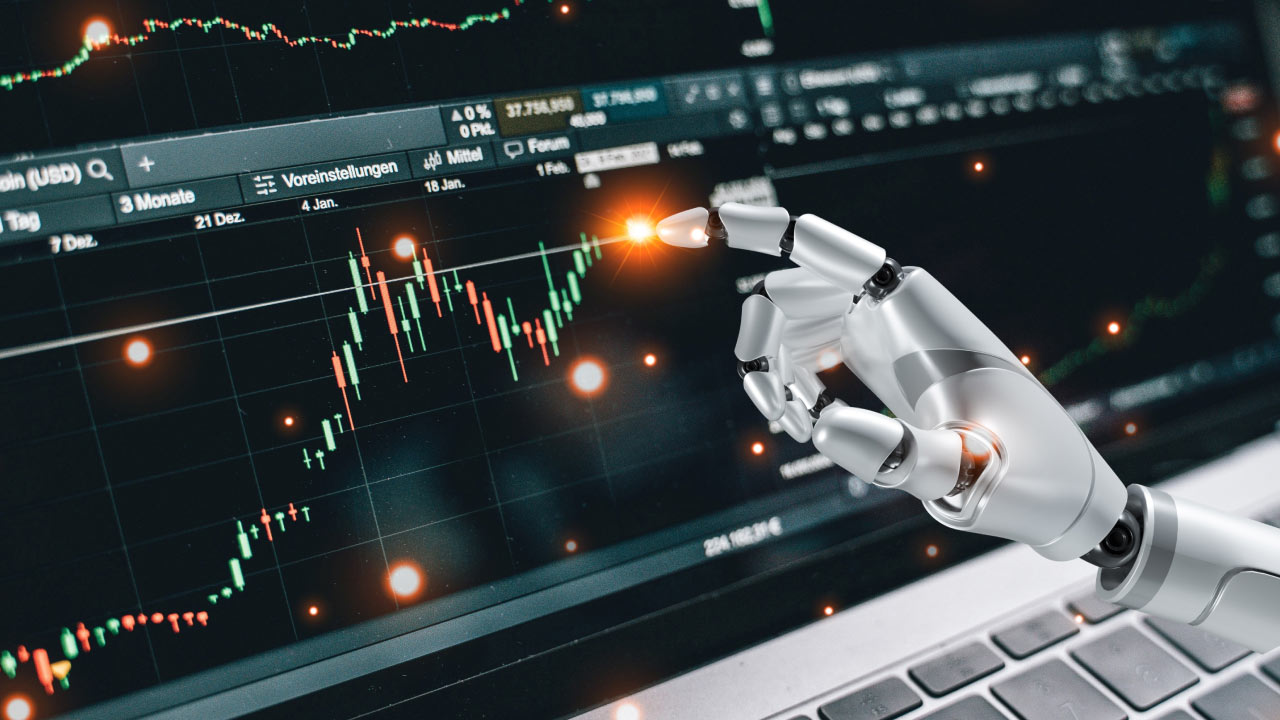
Benefits and Risks of Using AI in Trading: A robotic hand interacting with a forex trading chart on a computer screen, symbolizing AI-driven trading strategies.

Prop firm challenges have become one of the major ways for beginner traders to get access to huge trading capital without risking their own money. The challenges, as a rule, include a lot of tasks for traders where they have to manage risks, keep the same level of trading, and use their strategies under the prescribed trading conditions. Notably, MetaTrader 5 is the most popular trading platform among those who want to clear the evaluation and even more so among the ones collaborating with the best prop firm in 2025.

This article outlines the reasons behind the popularity of MT5 in prop firm challenges, points out the necessary things that traders should know, and tells how to manage the platform correctly for boosting success chances.

Why MetaTrader 5 Is the Top Choice for Prop Firm Challenges

The selection of the trading platform is a factor that is more or less paramount in your overall performance during a prop firm challenge. MetaTrader 5 (MT5) has been widely adopted for its combination of speed, stability, and a full range of tools for professional trading support. 

1. Multi-Asset Trading Capability

The challenges at prop firms generally allow trading in forex, indices, commodities, metals, and even crypto pairs. All these asset classes are supported by MetaTrader 5, thus making it extremely convenient for the traders to spread their strategies over different markets and take the most out of them.

With MT5, you can instantly switch between instruments, see multiple charts side by side, and use various technical tools according to your trading strategy.

2. Faster Order Execution

Every second counts in prop firm challenges. Slippage or delays in order execution may cause losses or miss opportunities that were yours for the taking. The high-speed trading infrastructure at MT5 is responsible for such a fast order execution:

Very low latency

Very high speed

Ability to process many different order types

Traders at the best prop firm in 2025 will find that MT5 is their ideal partner as trading precision and timing will often decide if one passes or fails the challenge.

3. Advanced Technical Analysis Tools

Availability of more technical indicators, better chart customization, and superior analytical tools is one of the main reasons why MT5 is preferred over older platforms. The technical resources available to the traders include:

38 built-in indicators

44 graphical objects

21 timeframes

Custom indicators and scripts

Traders using these tools are empowered to develop high-quality trading strategies that are in line with prop firm regulations.

What to Expect When Using MetaTrader 5 for Prop Firm Challenges

It is crucial to know the interaction of rules with MT5 features before joining a challenge. Many traders lose challenges, not due to the use of the wrong strategy, but overlooking platform-related details.

1. Daily and Overall Drawdown Monitoring

Typically, prop companies have rules on daily loss and total loss for the whole period of the challenge. Traders can monitor their balances in real-time thanks to MT5's equity monitoring feature and thus avoid breaking the rules by mistake. It is as if you are always being told the amount of your loss if you keep the terminal on during trading hours.

2. Trade Journal & History Analysis

The detailed trade history is part and parcel of the MT5 platform where traders could see through their trades:

Lot sizes

Opening and closing points

Profit/loss for each trade

Swap and commission charges

This is not only valuable for boosting your performance, but also making sure your strategy is right for the prop firms.

3. No-Hedging & Lot Size Limitations

Certain prop firms impose restrictions on hedging, lot sizes or trading during news events. To trade these trades, MT5 will allow you to do so, but the firm’s software will catch the violations in the backend. It is not the case that you can use MT5’s flexibility and disregard the challenge rules; rather, you must be disciplined and very strict with yourself about following the rules.

How to Optimize Your MT5 Setup for a Prop Firm Challenge

A well-structured MT5 setup not only increases productivity but also minimizes mistakes.

1. Create Multiple Chart Templates

Create different strategy templates—for instance:

Scalping template (1-min chart + fast indicators)

Swing trading template (H1/H4 chart + trend indicators)

News trading template (clean chart + price action tools)

Having such templates prepared beforehand saves a great deal of time and at the same time ensures uniformity.

2. Employ Expert Advisors for Risk Management

Risk control mechanisms, such as Lot size calculators, Trade management panels, and Position sizing scripts can be used even when EAs are prohibited for trading. The use of these tools will make it a practice for you to comply with the risk limits set by the best prop firm in 2025.

3. Don’t Overpopulate MT5 with Excess Indicators

Though MT5 can manage rather complex technical setups, excessive indicators can impair the speed of execution or cause a lack of decision. Thus, having a clear chart and relying solely on the helpful tools is the way to go.

Why the Best Prop Firm in 2025 Chooses MetaTrader 5

Modern, safe, and with the support of institutional-grade trading, many top companies choose MT5 as their favorite. 

The following reasons contributed to making it the best prop firm in 2025:

Improved back-testing functionalities

Sophisticated risk management functionalities

Multi-threaded strategy tester

Integration with automated systems

Complete mobile and web versions

All these functions are a great aid for funded traders to keep on their trading phases in a consistent and accurate manner.

Tips to Pass a Prop Firm Challenge Using MetaTrader 5

1. Prioritize Risk Over Reward

Prop firms do not care about large profits in a short time period; they rather prefer to value the consistency of profits over the long term. In every trade, risk parameters should be strictly followed.

2. Acquire the Mastery of One or Two Trading Strategies

MT5 provides the option of testing out various strategies, but during a contest it is best to limit oneself to the traditional methods and thus avoid making any kinds of unnecessary changes.

3. Trade When the Market is Most Liquid

The London and New York sessions give traders the best execution and least slippage, as well as the smoothest market movements.

4. Maintain a Personal Diary Separate from MT5

Though MT5 records your trades very well, the use of a handwritten or digital diary can be very instrumental in getting to know one's emotional and psychological patterns.

Final Thoughts

The prop firm challenges are quite competitive, but traders, by using the right tools, can raise their chances up to a great extent. MetaTrader 5 is the one that offers the speed, accuracy, and professional tools for participating in the challenge and doing it perfectly all the time. The combination of 2025's best prop firm’s guidance and MT5 creates a great and powerful platform for winning long-term trading success. 

In case you are going to take a prop firm challenge in the near future, one of the wisest strategies for you to become a funded trader is to master MT5.

Read MoreRead More

Top benefits of paper trading before trading live with the best prop firms for futuresTop benefits of paper trading before trading live with the best prop firms for futures

Benefits and Risks of Using AI in Trading: A robotic hand interacting with a forex trading chart on a computer screen, symbolizing AI-driven trading strategies.

One thing that beginners and even professional traders often miss is that proper preparation is a very essential ingredient before jumping into real markets with the best prop firms for futures trading. Among the best things that can be done by these traders to build their confidence and reduce their risk, is to practice paper trading. After all, many people are interested in paper trading: what is it, and why do they advocate having experience with it before dealing with live charts, margin calls, and volatile futures markets? 

It is a risk-free simulated trading platform, where one can place trades as a practice before trading with real money. The reality of the markets is quite well replaced and then supplemented with education and experimentation without incurring any commensurate risk. For anyone who hopes to succeed in evaluations or to create a successful career with the best prop firms for futures, it forms the backbone of long-term success.

Understanding Paper Trading in Futures Markets

It really means knowing “what is paper trading”. When there's a question on what paper trading actually is, the simplest way to define it is that it's a practice risk-free trading account given to the retail traders by platforms or brokers. There are movements in the price, types, and executions of orders that behave as if they are doing so in a real market, but capital is neither lost nor gained in actuality. 

For most of the traders who are preparing to go into prop firms for futures, this simulated environment will be of tremendous importance because these firms often have extremely rigorous evaluation phases and rules. Futures trading comes with leverage, is fast, and is volatile; therefore, practicing without financial pressure is really a good way for a trader to instill discipline and confidence.

1. It Helps understand Market Structure and Price Behavior:

Just as one of the greatest benefits offered by paper trading is one's opportunity to study the behavioral patterns and structures of the market. Futures markets do pour in very quickly, and beginners jumping directly into live trading before paper trading are likely to have a rather chaotic experience. Trading before that will expose them to day-to-day fluctuations, shifts in trends, and changes in volume, and will give them that experience without involving any risk. When playing that game for entry into the top prop futures firms, understanding market structure is needed to make trades consistent and strategic.

2. Eliminate Emotions through Paper Trading

Most importantly, paper trading shields an individual from emotional pressure. Most speculative traders fail not because their systems are not sound but rather due to failure to control such emotions as fear, greed, and impatience. What is paper trading? The importance of paper trading is not merely about technical jargon; there is a psychological aspect behind it as well. Without real money, you trade with a calm, non-panicked, and non-hesitant manner. This helps build emotional discipline, which you will need when live trading with the best prop firms for futures. Prop firms demand steady performance, and controlling your emotions early gives you a huge head start.

3. Testing Strategies Before Using Actual Capital

Testing strategies is another crucial advantage. Through good indicators, price action methods, or setups based on volatility, paper trading is an extremely useful tool in freely experimenting with such strategies without consequences. It is also possible for traders to record their settings and make different tests with timeframes or risk-management techniques. When preparing for the evaluations of the best prop firms for futures, having a proven strategy is one of the most important factors. It allows a safe environment through which that strategy can be perfected until it turns profitable and yields consistent results.

4. Confidence before Prop Firm Challenges 

Prop firm challenges demand a certain level of confidence on part of the trader. The trader is expected to reach profit goals within regulated drawdowns, lot size, and consistency. Taking up an evaluation without the necessary preparation would put the trader under pressure, leading to mistakes. However, the first practice in a simulated account helps boost one's confidence within. What is paper trading and how does it develop self-confidence to overcome hurdles with the best prop firms for futures? Enter the evaluation because you know your system works and that you can execute it under pressure. 

5. Strengthens Risk Management Skills with Paper Trading 

Futures trades would get blood running on the floor or something close to that; risk management has always been the strongest asset in futures. This is particularly true for risk management in the face of leverage. The practice trains the trader in the effective use of stop-losses, position sizing, and profit-taking. Such practice will keep you from over-leveraging and teach proper risk management so as to guard your account against severe drawdowns. The best prop firm for futures analyzes risk very stringently; therefore, cultivating these habits in the simulated environment really makes a huge difference. 

6. Get Used to Trading Platforms

Before trading live, you must know how to use your platform correctly – charting tools, order types, execution settings, and indicators. Paper trading basically inculcates the technical side of trading software into you. Whether you use MetaTrader, NinjaTrader, or any other of the best prop firms for futures, practicing ensures that you avoid execution errors later that might cost you a lot. 

Final Thoughts 

Knowing what is paper trading and the importance attached to it is a must for any trader set for the best prop firms for futures. Paper trading builds discipline, tests your strategies, improves emotionally stable, and strengthens the understanding of the market. Practice it until you are ready for the live conditions, without the risk of losing real money. You are more than likely setting yourself up for long term success in futures markets and passing prop firm challenges confidently with substantial development from paper to practice.

Read MoreRead More

How to Choose Between Urgent Care Grove City Ohio and the Emergency RoomHow to Choose Between Urgent Care Grove City Ohio and the Emergency Room

Different Types of Doctors & Their Roles Explained

When a sudden health issue arises, deciding where to go for medical treatment can feel overwhelming. For many people, the choice often comes down to urgent care or the emergency room. Understanding the differences between these two options can help you make an informed decision, save time, and avoid unnecessary costs. Whether you live in Grove City or Columbus, knowing when to visit urgent care Grove City Ohio or head to the emergency room is essential for getting the right care at the right time.

Understanding the Role of Urgent Care

Urgent care clinics are designed to handle non-life-threatening conditions that still require prompt attention. They bridge the gap between a regular doctor’s office and the ER, offering extended hours and walk-in appointments.

At urgent care Grove City Ohio, patients can receive fast and affordable treatment for common illnesses and minor injuries such as sprains, cuts, infections, colds, flu, and mild asthma attacks. Similarly, urgent care Columbus Ohio provides a convenient option for those living or working in the city who need same-day care without the long wait times or high costs associated with emergency rooms.

When the Emergency Room Is the Right Choice

Emergency rooms are equipped to handle severe and life-threatening conditions that require immediate, specialized attention. Situations such as chest pain, difficulty breathing, severe burns, uncontrolled bleeding, head trauma, or signs of a stroke should always be treated at the ER.

While urgent care centers offer excellent medical services, they are not equipped for advanced imaging, surgery, or intensive monitoring. If the situation appears critical or life-threatening, calling 911 or visiting the nearest emergency room is the safest decision.

Evaluating the Severity of the Situation

The key to choosing between urgent care and the emergency room is understanding the severity of the symptoms. Mild fevers, ear infections, minor cuts, rashes, or sprains can typically be treated quickly and efficiently at urgent care Grove City Ohio. Patients can walk in without an appointment and receive care within minutes, avoiding crowded ER waiting rooms.

On the other hand, sudden or severe chest pain, loss of consciousness, serious injuries, or uncontrolled bleeding are red flags that require emergency services. In such cases, urgent care would refer the patient to the ER for more advanced treatment.

Cost Differences Between Urgent Care and the ER

One of the biggest factors for many families is cost. Emergency room visits are significantly more expensive than urgent care visits, even for minor conditions. For example, treating a simple infection at the ER can cost several times more than at an urgent care center.

Both urgent care Grove City Ohio and urgent care Columbus Ohio offer transparent pricing and accept most insurance plans, making them a cost-effective alternative for non-emergency situations. By choosing urgent care appropriately, patients can avoid unnecessary medical bills while still receiving quality care.

Convenience and Wait Times

Urgent care centers are known for their efficiency and convenience. Most locations offer extended hours, weekend availability, and walk-in services, allowing patients to receive care outside of typical office hours.

Urgent care Columbus Ohio is especially convenient for those in the city who need quick access to medical services between work or classes. Likewise, urgent care Grove City Ohio serves residents in nearby communities who prefer not to drive into busy downtown areas.

Emergency rooms, on the other hand, often operate on a triage system, meaning patients with more severe conditions are treated first. Those with minor issues may experience long wait times.

Choosing Based on Location and Accessibility

Accessibility is another factor to consider. In urgent situations that are not life-threatening, choosing the nearest urgent care center can save valuable time. Urgent care Grove City Ohio is strategically located to serve suburban communities quickly, while urgent care Columbus Ohio offers convenient options for those in more urban areas.

For critical emergencies, proximity to a well-equipped hospital is essential, as emergency rooms provide immediate access to specialists and advanced medical equipment.

Making an Informed Decision

The decision between urgent care and the ER ultimately depends on the nature and severity of the medical issue. For everyday illnesses and minor injuries, urgent care is usually the best choice. For serious or life-threatening conditions, the emergency room is the appropriate destination.

By understanding the strengths of both urgent care Grove City Ohio and emergency services, families can make quick, confident decisions during stressful situations. Similarly, residents in larger urban areas benefit from the convenience and availability of urgent care Columbus Ohio, which often serves as the first line of care for non-emergencies.

Final Thoughts

Choosing the right healthcare setting can make a significant difference in both your treatment experience and your medical bills. Urgent care Grove City Ohio and urgent care Columbus Ohio provide fast, affordable care for non-emergency needs, while emergency rooms are essential for critical conditions.

By evaluating symptoms carefully, considering costs and wait times, and understanding the strengths of each option, patients can make informed decisions that lead to better health outcomes and a smoother care experience.

The next time an unexpected health issue arises, knowing when to choose urgent care and when to head to the ER can save you time, money, and unnecessary stress.

Read MoreRead More

Common mistakes with order types on MT5 for funded tradersCommon mistakes with order types on MT5 for funded traders

12 Tips on How to Make Money Online Trading

Indeed, when one is trading a funded account in a prop firm one trades entirely differently than a personal account. Funded traders have strict rules like the daily drawdown, maximum loss limits, and minimum targets to be achieved. In this high-stakes environment, a minute mistake in an order type can cost disqualification. MT5 has several types of order which help the trader execute accurately; but in most cases misuse of them is the cause of failure for funded traders.

This article brings out the usual mistakes with order types on MT5 and how they affect performance. It also shows how to avoid those as both the professionals and forex trading beginners. We will also see how the various different bits of types of charts in MT5 can prevent getting stuck in the past and help improve execution.

Mistake 1: Entering Market Orders Without Stop-Loss

The most common mistake that funded traders do is entering an order for a market without stop-losses. A market order is instantaneously executed, no doubt useful for quick-moving opportunities. But without that protective stop, traders risk unlimited downside.

Within prop firms, that mistake can earn an over-maximum daily loss in an instant. For example, buying EUR/USD at market with no stop-loss during volatile news could incur some large drawdowns before even realizing it.

Mistake 2: Misuse of Limit Orders

Limit orders are designed to execute at a specified price or better, but many funded traders misuse them by placing unrealistic levels. For instance, setting a buy limit too far below current price may cause missed opportunities, while setting it too close to resistance might result in constant stop-outs.

The issue is usually poor chart analysis. Without referencing candlestick or line chart patterns, traders often guess entry points rather than basing them on support and resistance.

Mistake 3: Over-Reliance on Stop Orders

Stop orders are valuable for breakout trading, but many funded traders rely on them exclusively. The mistake occurs when traders place stop orders without considering false breakouts. For example, placing a buy stop just above resistance in a choppy market can trigger an entry only for price to reverse.

In a funded account, repeated false breakouts can erode profit margins and risk disqualification.

Mistake 4: Pending Orders for Planning Ignored

There are funded traders who never bother to set up pending orders leaving the entire entering process dependent on their own manual entries. The result often leads such traders to emotional trade actions combined with delay in trades or overtrading because of the volatility of a session. Prop firms require discipline of the trading habits of their traders and evade pending orders mostly make traders breach their rules.

Mistake 5: Over-Leveraging with Multiple Orders

Funded traders sometimes open multiple orders of the same type without proper risk allocation. For example, placing three market buys on GBP/USD without adjusting lot size or stop-loss multiplies risk exposure.

This mistake often comes from overconfidence or impatience, especially in forex trading for beginners who are still learning. Prop firms penalize this behavior because it can blow through drawdowns quickly.

Mistake 6: Not Adjusting Orders to News Events

Another mistake committed by funded traders is leaving pending stop orders open just before releasing big-impact news. Leaving a buy stop above the resistance, for instance, before major decisions on interest rates usually causes the triggering of an entry spike only to have it reversed. 

This is the cause of many unnecessary losses and poor risk/reward consequences.

Mistake 7: Misunderstanding Timeframes and Chart Types

Order mistakes mainly crop up as a result of poor interpretation of charts. Most funded traders put orders by one time frame or one chart type. For instance, entering a market buy based on a 1-min candlestick without confirming trend direction on higher time frames can cause misalignment.

Why Beginners Make These Mistakes

Mistakes in order types while doing forex trading for beginners come mainly from inexperience, emotional trading, or lack of a structured plan. Beginners tend to rush prices with market orders, set unrealistic limits, and in some cases forget the stops altogether. These things may be tolerable enough in personal accounts to survive, but when shortcuts are taken within prop firms, it is costly because there's no disputing that discipline must be maintained.

Practicing on an MT5 demo account helps beginners learn how to use every order type, even in forming a combination with chart analysis. And with time, this builds the discipline needed to succeed with real prop firm funding.

Conclusion

When funded traders commit a careless blunder as far as order types are concerned on MT5, it leads to entry without stops, misuses limit orders, blindly relying on stop orders, ignoring pending orders, and over-leveraging-all errors impacting the risk-to-reward ratio and threatening a funded account. Indeed, bad chart analysis and emotional trading usually result in most of these mistakes.

By combining all these with the correct types of orders and various types of charts in MT5, traders can improve their execution, lower the risk, and remain disciplined. For both professionals and beginners in forex trading, mastering MT5 order types will not only help in execution but also survive and grow in the competitive landscape of prop firm trading.

Read MoreRead More

How S&P Futures Help Prop Traders Manage Risk and DrawdownHow S&P Futures Help Prop Traders Manage Risk and Drawdown

Markets to Trade: See IG's Range of Over 15,000 Markets  IG Ireland

If you've had any experience in the world of prop trading, then you know one thing: risk is the game. Whether you're trading stocks, futures, or forex, every funded account has rules—particularly around drawdown. Blow through your daily or total loss limits, and it doesn't matter how fantastic your strategy may look on paper—you're out.

That's where S&P futures, the E-mini (ES) and Micro E-mini (MES), enter the picture. They're not just popular CME contracts; they're tools prop traders rely on to maintain control of their risk and still pursue large returns. So let's explore why S&P futures are such a natural fit for risk management and drawdown protection in a prop trading environment.

Why Prop Firms Are Concerned With Risk and Drawdown

All prop firms are fixated on one thing: keeping their capital safe. How much skill a trader may exhibit doesn't matter—if they can't handle risk, they won't be around.

That's why most companies establish guidelines such as:

  • Daily drawdown limits (for example, 3–5% of the account value).
  • Total drawdown limits (usually 8–10%).
  • Requirements of consistency (no one-hit-wonder trades that blow up risk).

These regulations aren't intended to complicate life for traders; they're intended to eliminate gamblers and protect the firm's capital. To traders, risk control isn't simply good sense—it's survival.

Now, futures—particularly S&P futures—provide prop traders with some interesting tools for working with these regulations.

The Appeal of S&P Futures in Prop Trading

When you consider futures, there's a big list of contracts you can trade: crude oil, gold, euro-dollar, even soybeans if that is your passion. But in the prop world, the S&P 500 futures reign supreme. Here's why:

  • Liquidity like none other – You can get in and out of positions promptly without concern for slippage devouring your profits. For traders with tight risk constraints, that makes a difference.
  • Tight spreads – Low transaction costs mean you’re not losing money just by entering trades.
  • Micro contracts for scaling – The Micro E-mini (MES) lets traders practice risk management with smaller size, which is perfect for avoiding unnecessary drawdowns in funded accounts and makes it especially useful in futures trading for beginners.
  • Market breadth – The S&P 500 tracks the biggest U.S. companies, so you’re not exposed to the crazy volatility of single stocks. It’s a smoother way to capture broader market moves.

Managing Risk Through Position Sizing

Let's get real. Suppose you've got a $50,000 funded account with a 5% maximum drawdown rule. That leaves you with only $2,500 of room to breathe before you're out. That sounds like a lot, but several bad trades on a high-volatility instrument can eat through that in hours.

Now bring in S&P futures. With micro contracts, you can reduce it to as low as $5 per point. That's compared to the regular E-mini at $50 per point. That translates into:

  • A 10-point loss against you on the ES = $500 loss per contract.
  • A 10-point loss against you on the MES = $50 loss per contract.

Notice the difference? Micro contracts allow you to be in the same market but with greatly minimized risk exposure. With this option, it becomes easy to remain within the firm's guidelines and ride out the inevitable losing skids.

Drawdown Control with Diversification

S&P futures help smooth out your equity curve. Since the index reflects 500 companies across multiple sectors, you’re not tied to the fortunes of a single stock or commodity. That means less “gap risk” and fewer surprise losses that could tank your account.

Prop traders can also hedge S&P futures against other contracts—e.g., Nasdaq (NQ) or crude oil—to spread exposure. By not having all your eggs in one basket, you minimize the chances of a huge drawdown wiping out your account in one session.

Hedging as a Safety Net

Another underappreciated benefit? S&P futures can be used as a hedge. Suppose you're long something more volatile, such as Nasdaq futures. If you are concerned about a quick reversal, you might employ an ES contract to hedge that partially.

Example:

  • Long Nasdaq futures (exposure to high growth).
  • Short S&P futures (broad-market hedge).

If the market crashes, your hedge mitigates the damage, so your funded account remains alive. And in prop trading, remaining alive is half the battle.

Intraday Risk Management with S&P Futures

One of the most challenging aspects of futures trading funded accounts is managing intraday drawdown levels. You could be up $1,000 on a fantastic morning trade, but a sloppy afternoon entry can blow it away—and worse, leave you below the day's stop-out level.

S&P futures assist here due to their intraday volatility profile. They tend to move in a clean, orderly manner, particularly during the U.S. session. This simplifies it to place discrete stop-losses and trade risk management without unwarranted spikes cutting you out.

For example:

  • Morning breakouts on ES are favored because liquidity is highest.
  • You can place tight stops (2–3 points) without concern about random illiquid price action.
  • Smaller position sizes allow you to scale in and out without blowing through margins.

It all equals greater control over intraday risk—just what futures prop firms want to see.

The Psychology of Risk Management

Risk management isn't solely numbers on a screen. It also involves psychology. Traders tend to suffer from the compulsion to "make it back" after a loss, which creates oversized trades and blown accounts.

This is where S&P futures, especially micros, shine. They allow traders to:

  • Trade smaller sizes to cool off after a losing streak.
  • Stay engaged with the market without putting too much on the line.
  • Build consistency rather than swinging for home runs.

That consistency is exactly what prop firms reward. In fact, many firms don’t care if you’re making 10% a month or 2%—they care that you’re managing risk and avoiding reckless drawdowns.


Read MoreRead More