
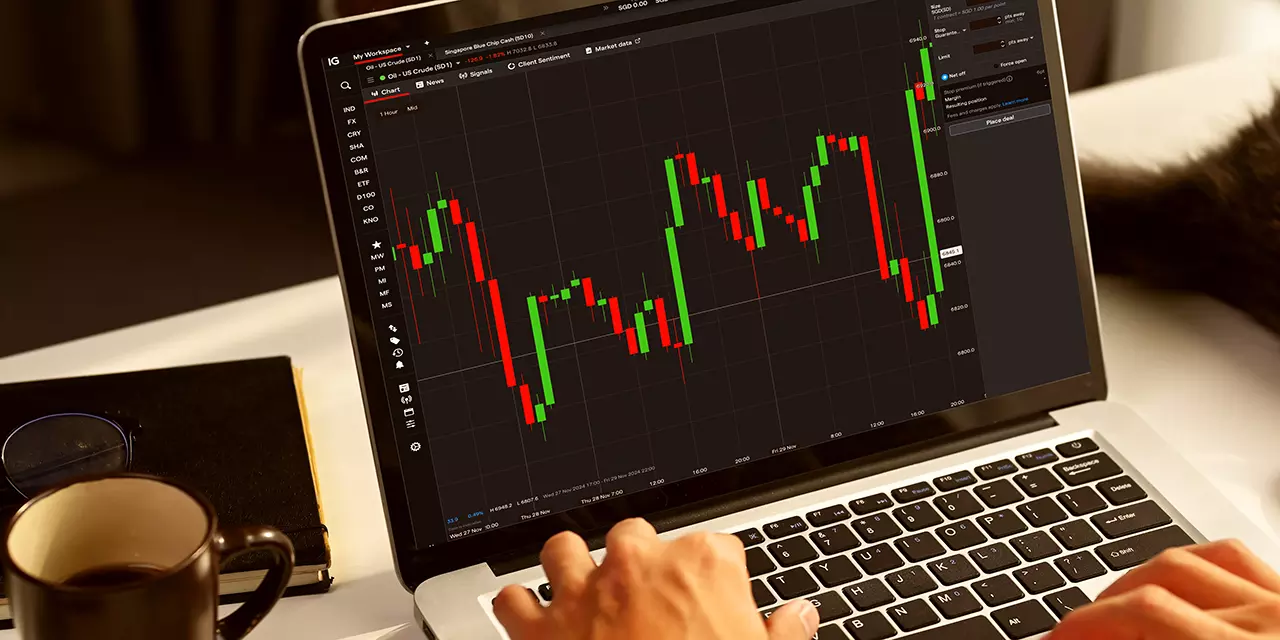
If you've had any experience in the world of prop trading, then you know one thing: risk is the game. Whether you're trading stocks, futures, or forex, every funded account has rules—particularly around drawdown. Blow through your daily or total loss limits, and it doesn't matter how fantastic your strategy may look on paper—you're out.
That's where S&P futures, the E-mini (ES) and Micro E-mini (MES), enter the picture. They're not just popular CME contracts; they're tools prop traders rely on to maintain control of their risk and still pursue large returns. So let's explore why S&P futures are such a natural fit for risk management and drawdown protection in a prop trading environment.
Why Prop Firms Are Concerned With Risk and Drawdown
All prop firms are fixated on one thing: keeping their capital safe. How much skill a trader may exhibit doesn't matter—if they can't handle risk, they won't be around.
That's why most companies establish guidelines such as:
- Daily drawdown limits (for example, 3–5% of the account value).
- Total drawdown limits (usually 8–10%).
- Requirements of consistency (no one-hit-wonder trades that blow up risk).
These regulations aren't intended to complicate life for traders; they're intended to eliminate gamblers and protect the firm's capital. To traders, risk control isn't simply good sense—it's survival.
Now, futures—particularly S&P futures—provide prop traders with some interesting tools for working with these regulations.
The Appeal of S&P Futures in Prop Trading
When you consider futures, there's a big list of contracts you can trade: crude oil, gold, euro-dollar, even soybeans if that is your passion. But in the prop world, the S&P 500 futures reign supreme. Here's why:
- Liquidity like none other – You can get in and out of positions promptly without concern for slippage devouring your profits. For traders with tight risk constraints, that makes a difference.
- Tight spreads – Low transaction costs mean you’re not losing money just by entering trades.
- Micro contracts for scaling – The Micro E-mini (MES) lets traders practice risk management with smaller size, which is perfect for avoiding unnecessary drawdowns in funded accounts and makes it especially useful in futures trading for beginners.
- Market breadth – The S&P 500 tracks the biggest U.S. companies, so you’re not exposed to the crazy volatility of single stocks. It’s a smoother way to capture broader market moves.
Managing Risk Through Position Sizing
Let's get real. Suppose you've got a $50,000 funded account with a 5% maximum drawdown rule. That leaves you with only $2,500 of room to breathe before you're out. That sounds like a lot, but several bad trades on a high-volatility instrument can eat through that in hours.
Now bring in S&P futures. With micro contracts, you can reduce it to as low as $5 per point. That's compared to the regular E-mini at $50 per point. That translates into:
- A 10-point loss against you on the ES = $500 loss per contract.
- A 10-point loss against you on the MES = $50 loss per contract.
Notice the difference? Micro contracts allow you to be in the same market but with greatly minimized risk exposure. With this option, it becomes easy to remain within the firm's guidelines and ride out the inevitable losing skids.
Drawdown Control with Diversification
S&P futures help smooth out your equity curve. Since the index reflects 500 companies across multiple sectors, you’re not tied to the fortunes of a single stock or commodity. That means less “gap risk” and fewer surprise losses that could tank your account.
Prop traders can also hedge S&P futures against other contracts—e.g., Nasdaq (NQ) or crude oil—to spread exposure. By not having all your eggs in one basket, you minimize the chances of a huge drawdown wiping out your account in one session.
Hedging as a Safety Net
Another underappreciated benefit? S&P futures can be used as a hedge. Suppose you're long something more volatile, such as Nasdaq futures. If you are concerned about a quick reversal, you might employ an ES contract to hedge that partially.
Example:
- Long Nasdaq futures (exposure to high growth).
- Short S&P futures (broad-market hedge).
If the market crashes, your hedge mitigates the damage, so your funded account remains alive. And in prop trading, remaining alive is half the battle.
Intraday Risk Management with S&P Futures
One of the most challenging aspects of futures trading funded accounts is managing intraday drawdown levels. You could be up $1,000 on a fantastic morning trade, but a sloppy afternoon entry can blow it away—and worse, leave you below the day's stop-out level.
S&P futures assist here due to their intraday volatility profile. They tend to move in a clean, orderly manner, particularly during the U.S. session. This simplifies it to place discrete stop-losses and trade risk management without unwarranted spikes cutting you out.
For example:
- Morning breakouts on ES are favored because liquidity is highest.
- You can place tight stops (2–3 points) without concern about random illiquid price action.
- Smaller position sizes allow you to scale in and out without blowing through margins.
It all equals greater control over intraday risk—just what futures prop firms want to see.
The Psychology of Risk Management
Risk management isn't solely numbers on a screen. It also involves psychology. Traders tend to suffer from the compulsion to "make it back" after a loss, which creates oversized trades and blown accounts.
This is where S&P futures, especially micros, shine. They allow traders to:
- Trade smaller sizes to cool off after a losing streak.
- Stay engaged with the market without putting too much on the line.
- Build consistency rather than swinging for home runs.
That consistency is exactly what prop firms reward. In fact, many firms don’t care if you’re making 10% a month or 2%—they care that you’re managing risk and avoiding reckless drawdowns.